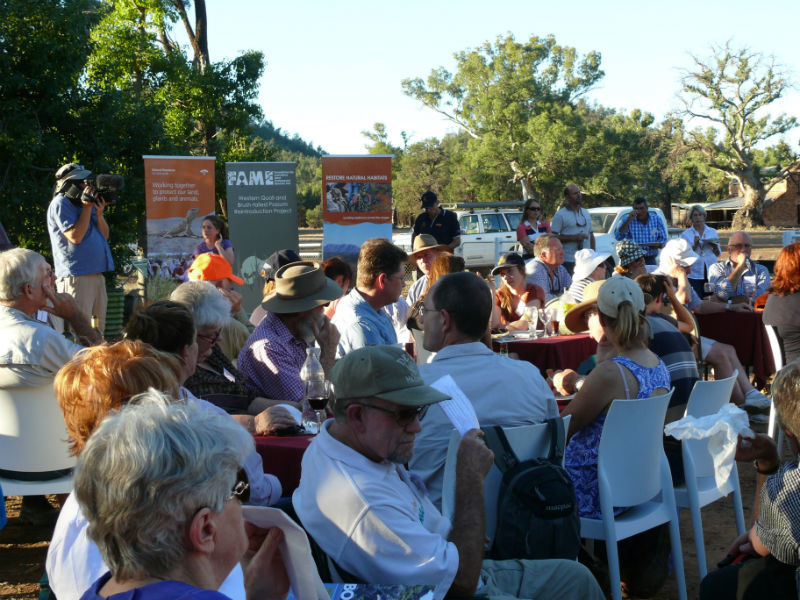
Western Quoll (Idnya) and Brushtail Possum (Virlda) reintroduction to the Flinders Ranges
Western Quoll (Idnya)
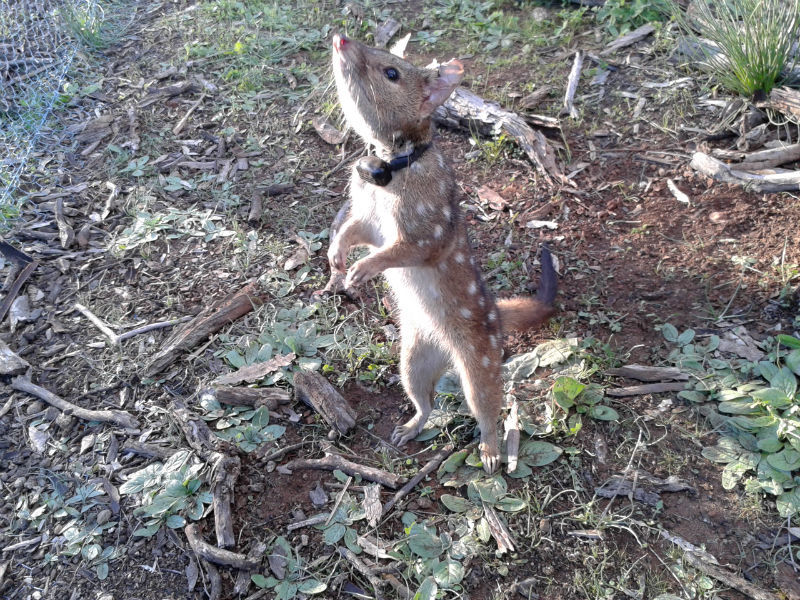
The Western Quoll (Idnya) is being re-introduced to the Flinders Ranges where it lived for centuries before European settlement.
The Idnya once ranged more than 80 per cent of the Australian continent.
It was last observed in the Flinders Ranges during the 1880s and prior to its reintroduction, was extinct in all parts of Australia other than the south-west of Western Australia, making it a nationally threatened species.
Successfully re-introducing a new population of Idnya to the central Flinders Ranges was a major step towards improving its conservation status and ultimately leading to having it delisted as a threatened species.
Western Quoll Reintroduction Project 2014
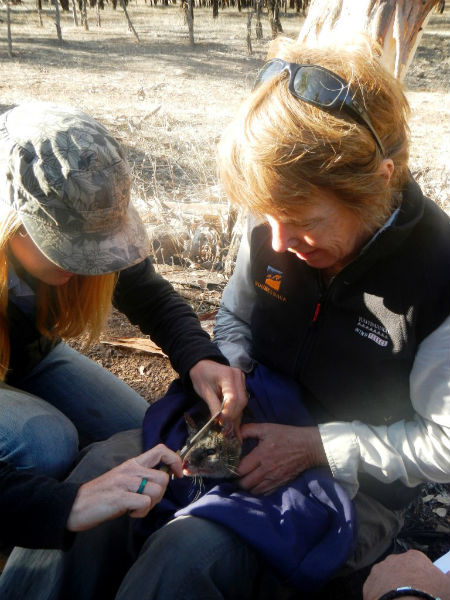
The Idnya were flown in from Western Australia, with the translocated animals and their offspring carefully monitored and radio-tracked to determine survival, cause of death, preferred habitats and den sites.
The project was staged over five years to allow time for the Idnya to breed and build sustainable populations within their traditional homelands in the Flinders Ranges.
Radio tracking and trapping was used over the course of the five-year program to determine the success of breeding and the health of the locally-bred animals.
Brushtail Possum (Virlda)
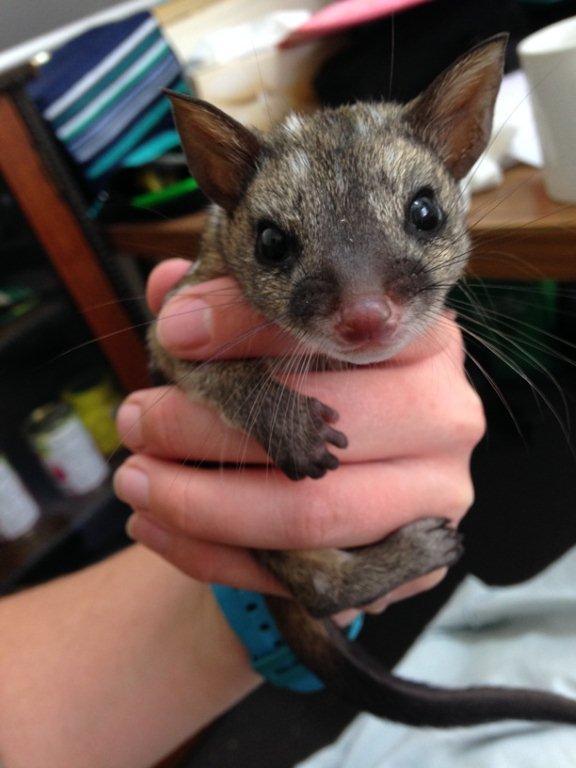
The Brushtail Possum (Virlda) was once common in the rocky ranges and creeklines in the arid interior of South Australia. Its numbers have declined since European settlement.
The Virlda was re-introduced to the Ikara-Flinders Ranges region, where it has been absent for 75 years – thought to have become extinct in the 1940s.
Prior to reintroduction the most northerly populations in South Australia were found at Quorn in the southern Flinders Ranges.
Despite being considered a pest in urban areas, possum populations are considered stable in only two regions outside of Adelaide: Kangaroo Island and the South East.
The Virlda were translocated from the Yookamurra Sanctuary near Swan Reach in South Australia. The translocated animals and their offspring were carefully monitored and radio-tracked to determine survival, cause of death, preferred habitats and den sites.
Successfully re-introducing a new population of Virlda to the central Flinders Ranges was a major step towards reversing the decline of the species in South Australia.
The Idnya and Virlda are totems of the Adnyamathanha people and the project will allow the local Adnyamathanha people an opportunity to witness the return of animals that are so important to their living culture.
The partners
The project brought together the Department for Environment and Water (DEW) and the Foundation for Australia’s Most Endangered Species(FAME), representing South Australia’s first public-private environmental partnership.
Both DEW and FAME also partnered with WA Parks and Wildlife, which provided the population source of Idnya and advice on translocation site selection, and translocation and monitoring techniques.
Thanks to the many volunteers, contractors, donors, land managers and partners of Bounceback and FAME and WA Parks and Wildlife for their support for this project.

Stay informed!
Idnya and Virlda e-news
To receive a regular email update on the Idnya and Virlda's progress please send an email to SAAridLands@sa.gov.au with the subject ‘Quoll/Possum update’
- Idnya e-News - April 2017
- Idnya e-News - August 2016
- Idnya e-news - December 2015
- Idnya e-news - September 2015
- Idnya e-news - July 2015
- Idnya e-News - June 2015
- Idnya e-News - April 2015
- Idnya e-News - December 2014
- Idnya e-News - September 2014
- Idnya e-News - July 2014
Across The Outback
As well as the Idnya and Virlda e-news, we also update the community on Idnya and Virlda news via our regular newsletter Across The Outback.
- Across The Outback 76 - Brushtail Possums (Virlda) settle into Ikara
- Across The Outback 74 - Fresh Idnya population arrives at Wilpena
- Across The Outback 73 - Idnya update
- Across The Outback 72 - Understanding Idnya behaviours
- Across The Outback 71 - Baby Idnya born in the Flinders Ranges
- Across The Outback 70 - Trial Western Quoll release – an update
- Across The Outback 69 - Trial release returns SA-extinct Western Quoll to the Flinders Ranges
Image gallery