About our region
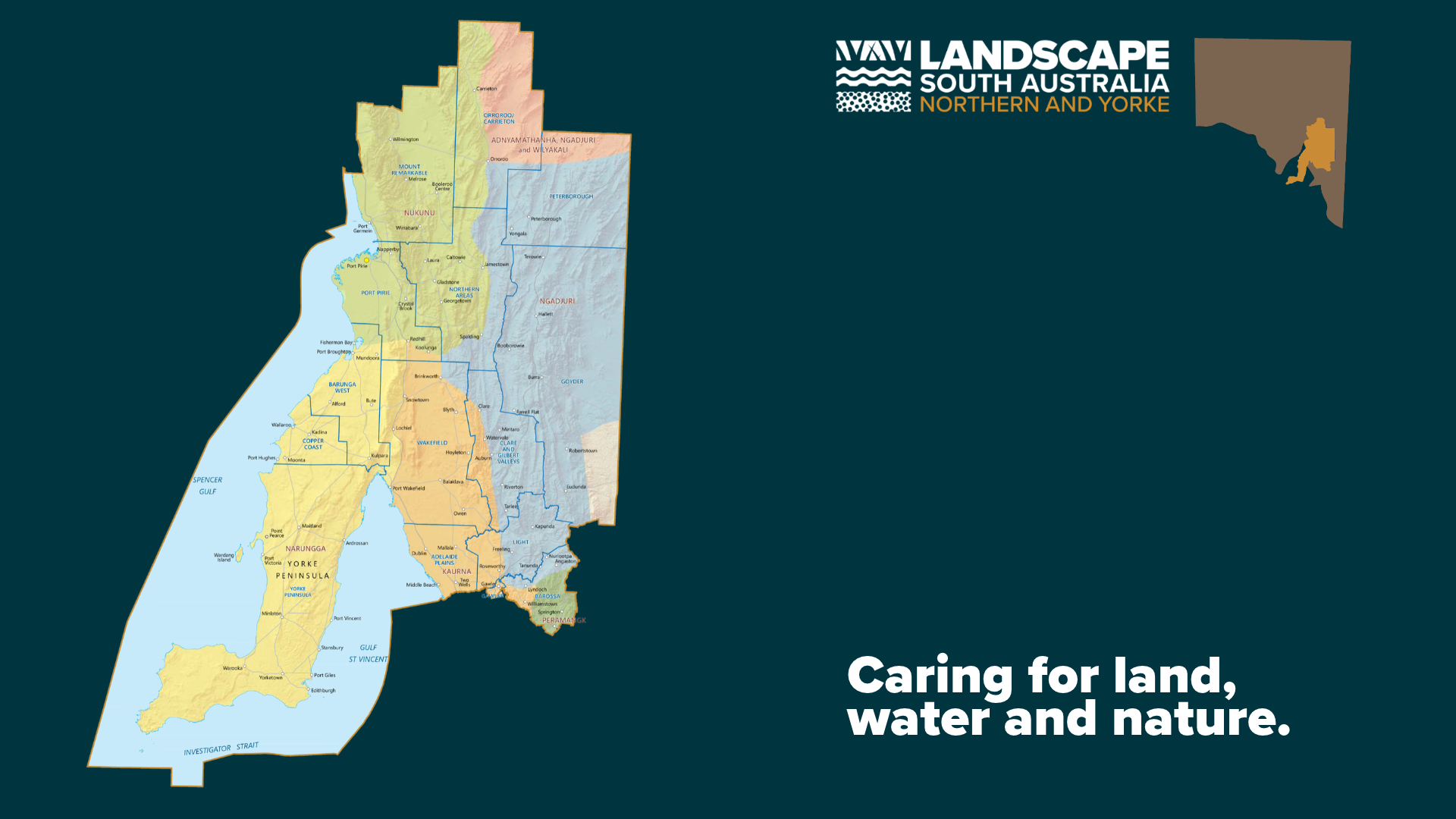
Northern and Yorke region of South Australia
From the rolling vineyards of the Clare Valley and Barossa to the coastlines of Yorke Peninsula and the rugged beauty of the Southern Flinders Ranges,the Northern and Yorke region is home to many of South Australia's most treasured places to live, work and visit.
Our region combines vibrant communities, productive agricultural landscapes, celebrated tourism destinations and unique natural environments.
This diversity makes the region one of the state's most economically significant and environmentally rich landscapes.
A diverse and productive landscape
The Northern and Yorke region stretches across 38,500 square kilometres and is home to more than 155,000 people. It encompasses the Northern Adelaide Plains, Yorke Peninsula, Northern Mount Lofty Ranges, Southern Flinders Ranges, and extensive areas of Spencer Gulf and Gulf St Vincent.
From thriving regional centres and coastal communities to productive farming districts and growing urban areas, the region is one of South Australia's most diverse and economically significant landscapes.
Significant population growth is expected across the Northern Adelaide Plains and northern Yorke Peninsula, bringing new opportunities and challenges for sustainable land, water and nature management.
World-leading sustainable agriculture
Agriculture is at the heart of the Northern and Yorke region, with around 80% of the land dedicated to dryland cropping and grazing. Together, these industries contribute approximately one quarter of South Australia's agricultural production.
The region is also home to some of Australia's most celebrated wine regions, including the Clare, Barossa and Eden Valleys.
Other major industries include mining and mineral processing, horticulture, forestry, fishing, aquaculture and tourism, all of which rely on the continued health and resilience of the region's natural resources.
Coastlines and marine environments
With more than 1,300 kilometres of coastline and 15,500 square kilometres of marine environments, the region includes some of South Australia's most spectacular coastal and marine ecosystems.
From dramatic cliff-lined shores and sandy beaches to expansive saltmarshes and mangrove habitats, the coastline supports an extraordinary diversity of plant and animal life. Beneath the waters of Spencer Gulf and Gulf St Vincent, important marine habitats include seagrass meadows, algal reefs, sponge gardens and diverse seabed ecosystems that provide breeding, feeding and nursery areas for countless species.
Biodiversity worth protecting
The region supports a rich array of native plants, animals and ecosystems. Protected areas across the landscape help conserve remnant native vegetation and provide vital habitat for wildlife, including many threatened species.
Rainfall varies considerably across the region, from around 250 millimetres annually in the north to more than 600 millimetres in the south. This diversity of climate and habitat contributes to the region's ecological richness while also supporting productive agricultural landscapes.
Ancient landscapes & geological treasures
The Northern and Yorke region contains geological features of national and international significance. The Southern Flinders Ranges hold evidence of some of the earliest complex life on Earth, including internationally recognised Ediacaran fossils dating back hundreds of millions of years.
The region is also home to important fossil discoveries near Burra, including remains of ancient megafauna, while geological features such as glacial erratics near Port Vincent provide remarkable insights into Earth's distant past.
Water and soil: The foundations of life
Healthy soils and reliable water resources underpin both the region's economy and environment.
Surface water, groundwater, springs and permanent refuge pools support biodiversity and community needs across a landscape where most watercourses flow only seasonally. At the same time, the region's soils provide critical habitat for countless plants, animals and microorganisms while supporting the agricultural industries that drive local economies.
Protecting these natural assets is essential for maintaining productive landscapes, healthy ecosystems and thriving communities.
Caring for Country
The land is traditionally cared for by the Kaurna, Narungga, Ngadjuri, Nukunu and Peramangk nations, whose enduring cultural connections to Country, knowledge systems and stewardship continue to shape and enrich the region today.

The region supports a population of approximately 150,000 people who reside in agricultural, coastal and urban communities. It welcomes a large number of visitors each year to destinations that include Dhilba Guuranda-Innes National Park, the Barossa Valley, the Clare Valley and the Southern Flinders Ranges.
The region includes traditional Aboriginal lands of the Narungga, Nukunu, Ngadjuri, Kaurna and Peramangk people.
The major urban centres are Port Pirie, Gawler, Nuriootpa, Clare, Burra, Peterborough, Kadina, Moonta and Wallaroo.
Natural resources underpin a range of industries. Approximately 80% of the region is under agricultural cropping and grazing production contributing a quarter of South Australia's agricultural earnings. The region embraces the major Barossa Valley and Clare Valley wine growing regions, and supports significant mining and mineral processing activities, fishing, aquaculture, forestry, horticulture and tourism.
Northern and Yorke and its marine waters are home to:
- 1,299 native species of vascular terrestrial plants
- 33 native species of terrestrial mammals
- 304 recorded native bird species
- 91 native reptile species
- 9 frog species.
The major threats to natural resources in the region are:
- habitat loss and fragmentation
- environmental weeds
- incompatible stock grazing and access
- feral animals
- over-abundance of problem native animals
- inappropriate fire regimes
- soil acidification
- inappropriate off road vehicle use
- excessive water extraction and storage
- coastal development
- overfishing by both commercial and recreational fishers
- nutrient pollution of marine environments
- introduced marine pests
- disturbance and destruction of intertidal reefs.
Managing landscapes in the region
Many individuals and organisations share an interest in ecologically sustainable management of the region's landscapes, including:
- primary producers
- resident communities
- volunteer groups
- seasonal tourist communities and commercial operators
- Northern and Yorke Landscape Board
- state and federal government agencies.
Managing our landscapes is about working together to ensure that the needs of the community, industries and the environment are balanced in a way that is sustainable.
With this balance in mind, the vision for the region's landscapes is that they are 'a healthy, living landscape meeting the social, environmental, economic and cultural needs of the community, and ensuring the rights and wellbeing of future generations'.

Image gallery