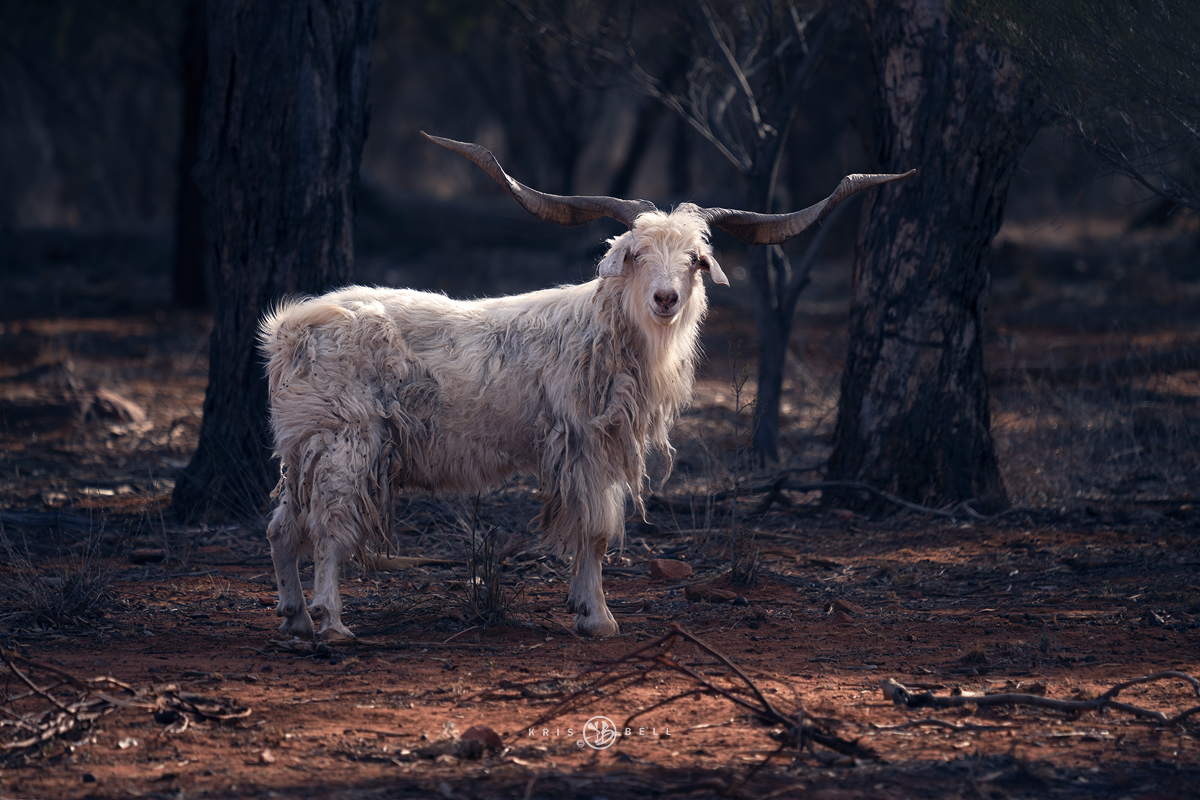
Feral goat management
A feral goat is a goat that lives in a wild state and is not farmed of kept for another purpose. It's a highly social animal, and typically gather in family groups to form herds. They are most active during the day and rest at night in regular camps that is usually centered around a water source.
Feral goats are an agricultural and environmental pest.
They compete with livestock and native animals for pasture, move freely through the environment and eat the same species grazed by sheep, to the ground. They pose a significant threat to landscapes, including the natural habitat for protected and endangered species, cultural sites, grazing and agricultural land.
Total grazing impact and reduction of vegetation by large and rapidly expanding herds with indiscriminate grazing habits of ground cover and canopy cover, hastens the onset of drought conditions and erosion impacts in the rangelands.
Continuous, selective grazing prevents seedlings from reaching adulthood, leaving no new plants to replace natural mortaility. As these species disappear, food and shelter for native fauna diminish, habitat structure degrades and stock feed quality and diversity decline.
This sustained grazing pressure drives the decline and eventual localised extinction of long-lived trees and shrubs.
Competition and land degradation by feral goats saw it listed as a key threatening process under national environmental law in 1994. This listing led to the development of national threat abatement plans in 1998, 2008 and more recently in 2023. The impact caused by feral goats has resulted in it being listed under the Environment Protection and Biodiversity (EPBC) Act as one of the top five invasive species nationally in terms of its negative impacts on threatened species.
Controlling feral goats
The best form of goat management requires more than one option to control the population. Rather than implement options in isolation, think of a goat control program as a combined strategy.
Legally, landholders must control feral goat populations. This can be done by mustering, ground shooting, aerial control and trapping, or using all options together.
For those mustering, releasing any goats, including those that are too small or large to ship to market, is in direct violation of the Landscape SA Act 2019. The act of doing so can incur a maximum penalty of $125,000 or two years imprisonment via prosecution. Landholders not complying with directions from an Authorised Officer may also be subject to an expiation fee.
This is just one penalty relating to feral goats management in the regulations of the Act. <Read the Landscape SA Act 2019 Regulations>
The SA Arid Lands Landscape Board regularly runs programs to support land managers in removing the unfit to load goats. Contact the board’s office for more information on these. Those that are fit to load once captured cannot stay on a property for any longer than six weeks, regardless of market price.
Resources
Sustainable Use of Undersized Goats - A Fact sheet outlining a project that will help landholders manage undersized goats not suited for loading or market.
Plants Under Pressure outlines how to read the landscape to determine your grazing pressure - and recognise the species that are grazing on your land.
Country Condition Checklist can be used in association with Plants Under Pressure and can record the condition of your land at a set point in time.
Feral goats - The cost to land and business outlines the impacts caused by feral goats and why controlling them is crucial. It outlines the cost of unmanaged goats and the responsibilities and expectations for land managers
Image gallery