Beetles on a Mission: SA deploys tiny army against prickly pear
South Australia has some new residents - and they're already making themselves at home by chewing straight into one of our prickliest problems.

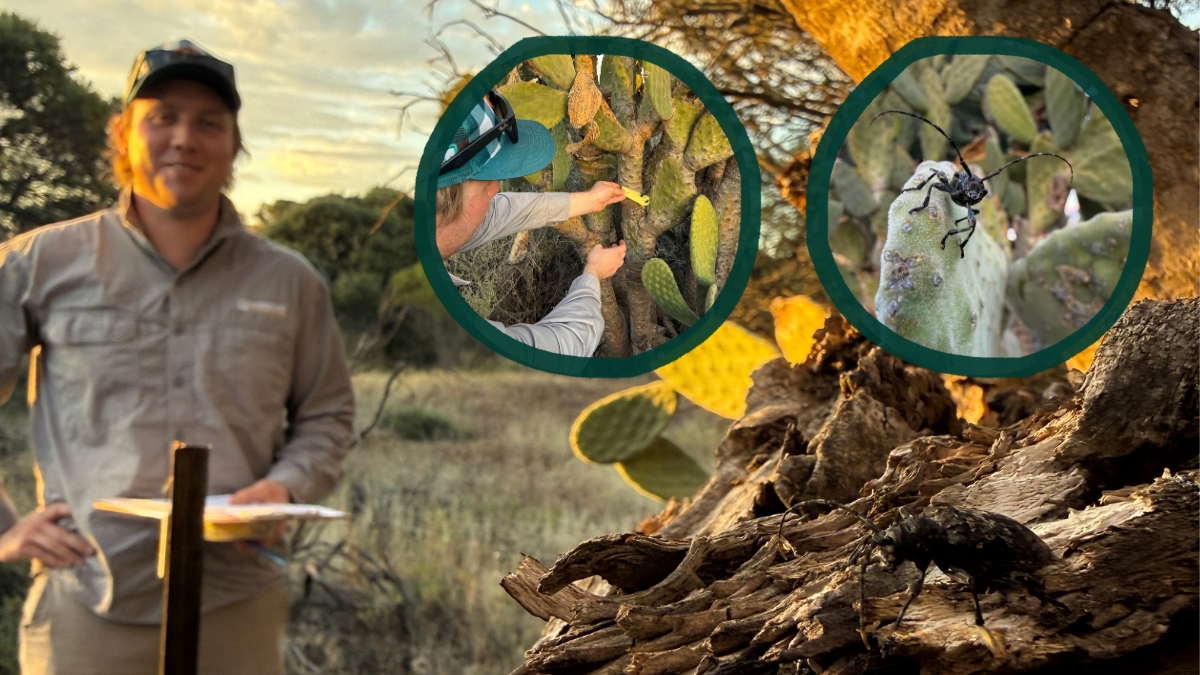
Landscape Officers have released the brown prickly pear stemborer (Lagocheirus funestus) at Wallaroo Mines. Sourced from Queensland, this is the first time this biocontrol beetle has ever set foot (six of them) in our state.
Their mission? To take down the stubborn tree pear cactus that’s been muscling its way across the region. Tree pear and other opuntia species are Weeds of National Significance – tough, spiky, fast spreading and seriously bad news for farms, wildlife and anyone hiking in shorts.
Back with a vengeance
Originally introduced to Australia in the 1930s from Mexico, the tiny trunk‑boring beetles were thought to have vanished after close to wiping out prickly pear at several sites in outback Queensland and New South Wales. They then disappeared from view for decades. That is, until they unexpectedly resurfaced in south west Queensland in 2023. Thanks to a renewed mass breeding program by the Queensland Department of Primary Industries in Charters Towers, they’re now back on the job – and very ready to munch.
Ready to tackle SA’s prickliest problem
Impressed by the quick work they made on the prickly problem in the northern states, the Northern and Yorke Landscape Board rallied to be amongst the first to try it out on SA soils, and were excited to receive their first shipment just before Christmas and a second in early January.
Around 230 beetles have now been released at an ideal secure site near Kadina, where locals will attest that prickly pear has been a long standing thorn in everyone’s side.
Early signs are promising: fresh chew marks and tiny furrows in cactus stems suggest the beetles are already laying eggs. Once the larvae hatch, they’ll tunnel through trunks and pads, weakening the plant from the inside out and causing limbs to snap – which is exactly what the team is hoping for.
“It’s not every day you get excited about beetles that chew holes in things – but these ones are absolute legends when it comes to tackling prickly tree pear,” says Landscape Officer Jamie Pook.
“They’ve been incredibly effective up north, and we’re hopeful they’ll help us get on top of problem tree pear populations here in our region.”
Double threat
The stemborer will join another biological agent already working hard across the Northern and Yorke region: cochineal mealybugs that soften up the pads. Add stemborers drilling straight into the trunk and you’ve got a bona fide double threat team – each attacking a different part of the cactus until, with any luck, the whole plant finally gives up.
Officers will return to the site in March and every few months after that to check how the larvae are fairing, and whether this hardy little beetle from warmer climates can brave our South Australian winter.
This project is supported by Queensland Department of Primary Industries through funding from the Australian Government’s Future Drought Fund
Image gallery